
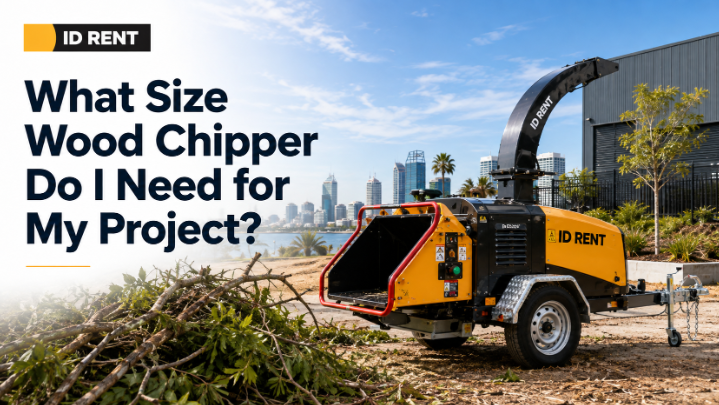
If you are asking, “what size wood chipper do I need?”, start with the material rather than the machine. Branch diameter matters, but it is only one part of the decision. You also need to consider timber type, daily volume, site access, towing limits, and chip disposal.
This wood chipper size guide explains each factor in simple terms. It can help arborists, landscapers, councils, contractors, and property managers choose a practical setup. It also explains when a chip truck may help and what to check before arranging wood chipper hire Perth services.
How Is Wood Chipper Size Measured?
A chipper is often described by its maximum branch diameter. An eight-inch machine should accept material up to about eight inches under suitable conditions. However, the stated wood chipper capacity does not tell the full story.
Other important features include:
- Infeed opening: A wider opening accepts forked branches and bulky brush more easily.
- Engine power: More power can help the machine maintain output under load.
- Hydraulic feed system: Feed rollers pull material towards the cutting drum or disc.
- Processing capacity: This shows how much material the machine can handle over time.
- Machine weight: Weight affects transport, towing, ground pressure, and access.
Two chippers with the same diameter rating may still perform differently because power, feed strength, and hopper size vary.
ID Rent lists models from Bandit, Först, Hansa, Linddana, and Vermeer. Its current range includes machines for pruning work and larger vegetation-clearing jobs.
Match the Chipper to the Project
The best machine depends on the work you need to complete. This quick wood chipper size guide gives a useful starting point.
| Project type | Suitable starting point |
| Light pruning and small garden branches | Compact chipper |
| Regular landscaping and property maintenance | Medium commercial chipper |
| Arborist work and larger branch removal | Heavy-duty hydraulic-feed chipper |
| Large tree removal and land clearing | High-capacity commercial chipper |
These are general categories. Confirm the largest material size and machine specifications before hiring. A larger wood chipper for tree removal can save time on thick limbs, forked branches, and heavy timber.
What Diameter Branches Will You Be Chipping?
The largest branch should guide your minimum machine size. Measure the thickest sections rather than estimating by sight.
Do not choose a chipper that only just matches the largest branch. Real material is rarely straight and even. Knots, forks, bends, and side growth can make a branch harder to feed.
For example, the Först ST8 listed by ID Rent has an eight-inch capacity. The Linddana TP215 can process trunks up to 215 mm. The Vermeer BC1200XL is listed for material up to 12 inches. The Vermeer BC1500 and Bandit 15XPC are 15-inch class machines.
If you are unsure what size chipper for branches will suit the job, allow some spare capacity. A larger opening and stronger feed system can reduce the time spent trimming branches before feeding them.
Bandit advises that a 12-inch machine may suit work without larger material. It suggests considering a 15-inch or larger unit when crews often process large branches or whole trees.
What Type of Material Are You Processing?
Branch diameter is important, but the material type also affects performance.
Fresh green timber often feeds well because it remains flexible. However, leaves and brush can create a bulky load. A wide infeed opening may help.
Dry timber can be harder and less flexible. Dense hardwood may place more load on the engine and cutting system. A machine with extra power may be more suitable.
Forked branches can catch at the hopper. They often require more trimming when the opening is narrow. Strong feed rollers can compress and pull difficult material more effectively.
Palm material can be fibrous. Mixed vegetation waste may include vines, leaves, branches, and irregular pieces. Tell the hire company exactly what you plan to process. This helps them recommend a wood chipper for green waste rather than choosing only by diameter.
Commercial wood chipper hire should be based on real material details where possible. Photos can help the supplier understand the branch shape, timber type, and estimated volume.
How Much Material Do You Need to Process?
The volume of material affects both machine size and hire duration.
A compact chipper may suit cleanup and regular landscaping work. A larger unit may be better for:
- Full tree removal
- Storm cleanup
- Council maintenance
- Commercial vegetation clearing
- Large property work
- Ongoing arborist operations
A larger wood chipper capacity can reduce handling and labour time. However, a large machine may cost more to transport, need a heavier towing vehicle, and require more space.
For regular professional work, arborist wood chipper hire should balance branch capacity with crew size. A small crew may not feed a very large chipper fast enough to gain the expected benefit.
Will the Chipper Fit Through the Site?
Access can rule out an otherwise suitable machine. Check the full route before booking.
Measure:
- Gate width
- Access roads
- Turning room
- Overhead clearance
- Slopes
- Soft ground
- Noise-sensitive locations
- Safe loading area
Measure the full route from the unloading point. A towable unit needs vehicle access and turning space. A tracked machine may offer better manoeuvrability and stability on restricted, soft, or uneven ground.
Before arranging towable wood chipper hire, check whether the full setup can enter, turn, operate, and leave safely.
Towable vs Tracked Wood Chippers
A towable chipper moves behind a suitable vehicle. It is practical for road travel between worksites and often suits crews that move several times during the day.
Towable wood chipper hire can be cost-effective when the customer already has the correct vehicle and a trained driver. The site still needs enough room for safe positioning and feeding.
A tracked chipper can move independently around the work area. It may suit uneven ground, narrow areas, slopes, or sites that a towing vehicle cannot reach. Transport to the property may still require a truck or trailer.
Vermeer offers both towable and tracked options in parts of its larger chipper range. This shows why transport method should be considered alongside cutting capacity.
Do You Also Need a Chip Truck?
A chipper turns branches into smaller material, but the chips still need somewhere to go.
A chip truck collects the output and reduces repeated handling.
Searches for wood chipper and truck hire Perth often come from crews that need both processing and removal. This setup may suit tree removal, roadside pruning, council work, storm cleanup, and larger commercial sites.
You may not need a truck when the chips will remain on the property as mulch. In that case, plan a safe discharge area away from people, buildings, vehicles, and public access.
ID Rent lists woodchipping trucks beside its chipper range. Ask whether the truck body and discharge height will work with the selected machine.
What Vehicle Do You Need to Tow a Wood Chipper?
Never assume that a vehicle can tow a chipper because the towbar looks strong enough.
Check the chipper or trailer weight, trailer rating, vehicle towing capacity, Gross Trailer Mass, tow-ball limits, braking requirements, safety chains, and load distribution.
Transport WA advises drivers to keep the vehicle, trailer, tow hitch, axle, and total mass within the manufacturers’ ratings. Its guidance also states that trailers with a Gross Trailer Mass of 750 kg or more generally require brakes.
When comparing wood chipper hire Perth options, provide the make and model of the towing vehicle. The hire team can confirm whether customer collection is suitable or delivery is safer.
Safety Checks Before Chipping Starts
Wood chippers contain powerful feed rollers and a fast cutting drum or disc. Only trained and authorised people should operate them.
Safe Work Australia identifies the infeed rollers and cutting system as major hazards. Its guidance warns that loose clothing, gloves, ropes, or branches can pull a worker towards the machine.
Before use:
- Read the operating instructions.
- Complete a pre-start inspection.
- Check guards and emergency controls.
- Keep ropes and loose items away from the infeed area.
- Wear the required personal protective equipment.
- Keep other people outside the work zone.
- Stop and isolate the machine before clearing a blockage.
Safe Work Australia also advises isolating the controls before anyone accesses the inside of a chipper.
Commercial wood chipper hire does not remove the hirer’s safety duties. The hirer must provide competent workers and follow the manufacturer’s instructions and site procedures.
Questions to Answer Before Requesting a Quote
A clear project brief helps the hire company recommend the right machine.
Provide:
- Maximum branch diameter
- Timber or vegetation type
- Estimated material volume
- Project location
- Gate width and site access
- Ground conditions
- Hire duration
- Towing vehicle details
- Chip disposal plan
- Need for a chip truck
When asking what size chipper for branches is suitable, include clear photos. Mention large forks, dense hardwood, palm material, or mixed green waste.
For a wood chipper for tree removal, explain whether you need to process the trunk or only the crown and branches. Whole-tree work may require a much larger machine.
A provider offering arborist wood chipper hire should also ask about daily output and how often the crew will move between sites.
Common Wood Chipper Selection Mistakes
Choosing by price alone can increase labour and hire time. Underestimating branch size creates similar problems, so measure the widest and most forked pieces.
Poor access planning can also delay work. A machine may reach the property but fail to enter the work area.
Some customers forget the towing vehicle. The full combination must remain within the relevant ratings.
Others plan the chipping but ignore disposal. Wood chipper and truck hire Perth may be the better choice when the site cannot store mulch or loose chips.
Finally, do not select a wood chipper for green waste without explaining the material mix. Leaves, vines, palms, brush, and timber can behave differently in the machine.
Choose the Right Chipper for Your Perth Project
The right chipper should handle the largest material without creating unnecessary transport or access problems. It should also match the daily volume and the crew’s ability to feed it safely.
Start with branch diameter, timber type, access, and expected output. Then check machine weight, towing limits, chip disposal, and hire duration.
ID Rent supplies wood chippers and related trucks for professional projects across Perth and Western Australia. Its listed range includes Bandit, Först, Hansa, Linddana, and Vermeer equipment across several capacity classes.
Share clear photos, measurements, and project details when requesting a quote. This information will help the team recommend a practical commercial wood chipper hire setup.