
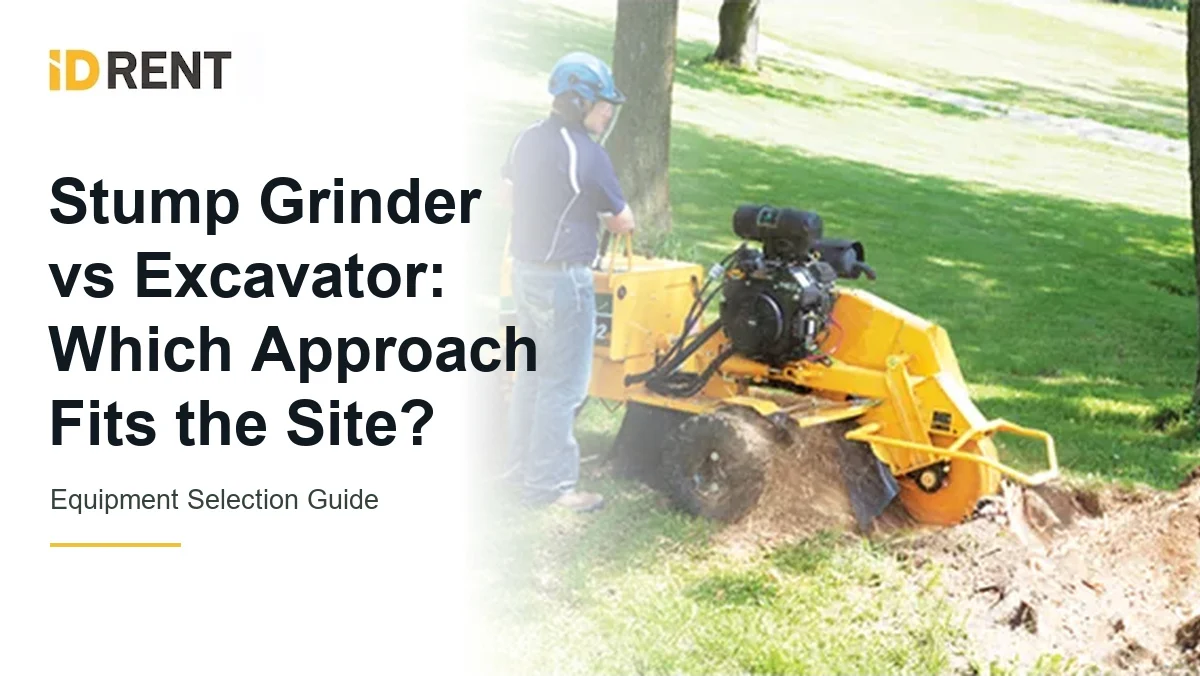
Removing a tree can leave behind a stump that creates problems for landscaping, garden improvements or future construction work. When planning what to do next, one common question is whether to use a stump grinder or an excavator.
Both machines can play a role in stump-related projects, but they are designed for different tasks. A stump grinder is primarily used to grind down stump material, while an excavator is designed for digging, moving soil and other earthmoving activities.
The right approach depends on the intended result, stump size, ground conditions, site access and surrounding structures.
If you're comparing equipment hire options in Perth, understanding these differences can help you prepare a more informed enquiry.
1. What Is the Difference Between a Stump Grinder and an Excavator?
The main difference comes down to how each machine works and what the project needs to achieve.
A stump grinder is designed to reduce tree stump material through a grinding process. It may be considered for projects where the primary objective is to address the remaining stump without planning broader excavation work.
An excavator, including a mini excavator, is designed for digging and moving material. It may form part of a larger landscaping or ground preparation project where excavation is already required.
However, neither machine is automatically suitable for every stump or site.
Stump grinder vs excavator: quick comparison
On smaller screens, swipe across the comparison table.
| Consideration | Stump Grinder | Excavator |
|---|---|---|
| Primary purpose | Grinding stump material | Digging and moving material |
| Typical project focus | Stump reduction | Broader excavation and earthworks |
| Root system | Grinding does not necessarily remove the entire root system | Root-related excavation may be considered as part of planned works |
| Site access | Depends on grinder dimensions and configuration | Depends on excavator dimensions and operating clearance |
| Ground disturbance | Depends on the stump and working conditions | Depends on the excavation scope and site conditions |
| Equipment selection | Requires stump and site assessment | Requires excavation and site assessment |
The best choice depends on what needs to happen to the site after the stump-related work is completed.
2. When Should You Consider a Stump Grinder?
A stump grinder may be worth considering when the project is mainly focused on reducing the remaining tree stump.
For example, after a tree has been removed from a garden or landscaped area, the stump may interfere with future planting, lawn preparation or property maintenance.
A stump grinder is designed specifically for this type of work, although its suitability depends on the actual stump and equipment.
Factors to consider before hiring a stump grinder
Stump dimensions
Record the approximate diameter of the stump and whether its shape or surrounding roots create additional complications.
Number of stumps
The number and location of stumps can influence equipment requirements and the work involved.
Site access
Narrow gates, pathways, garden structures and uneven surfaces can affect whether a particular grinder can reach the work area.
Surrounding surfaces
Paving, garden beds, lawns, drainage and nearby structures may require additional planning.
Required finished result
Grinding a stump does not necessarily mean removing its entire root system. Consider whether further landscaping or excavation will be required.
Before hiring, confirm the exact grinder's specifications and whether it is suitable for the intended work.
Explore the Stump Grinders equipment range at ID Rent to review listed hire options.
3. When Could an Excavator Be Considered?
An excavator may be relevant when stump-related work forms part of a broader excavation or site preparation project.
For instance, a landscaping project might involve removing soil, changing ground levels or preparing an area for further work.
In these situations, an excavator could already be under consideration for the wider project.
However, using an excavator for stump-related work requires careful assessment.
Important considerations
- The size and condition of the stump and surrounding root system.
- The type and stability of the soil.
- Nearby buildings, fences, paving and retaining structures.
- Underground services and drainage.
- Available working and manoeuvring space.
- The capabilities and limitations of the specific excavator.
A mini excavator should not automatically be considered capable of extracting a particular stump.
Stump-related excavation can involve substantial forces, underground hazards and ground disturbance.
The appropriate approach should be determined by competent site professionals using verified equipment information and a proper understanding of the work.
If excavation is part of your project, browse ID Rent's Mini Excavators category for equipment information.
4. How Site Access Affects Equipment Selection
Site access is an important consideration when comparing a stump grinder and an excavator.
Even if a machine appears suitable for the task, it may not be practical for the available work area.
Before requesting equipment hire, inspect the route from the equipment unloading point to the stump.
Check the following access conditions
- Gate and pathway width: Measure the narrowest usable opening along the complete route.
- Turning space: Consider corners and obstacles that may limit manoeuvring.
- Ground conditions: Identify slopes, uneven terrain, soft soil and changes in level.
- Overhead restrictions: Note branches, structures and other obstacles.
- Working area: Check whether there is enough room for the proposed machine and its operating requirements.
For example, a stump located in a backyard may have sufficient space around it but limited access through a narrow side passage.
That restriction could influence which equipment can be considered.
Always compare accurate site measurements with the manufacturer's specifications and clearance requirements for the exact machine.
5. Consider Ground Disturbance and the Finished Surface
Another factor when comparing a stump grinder and an excavator is the condition you want the area to be in after the work.
Stump-related projects can affect nearby soil, vegetation, paving and landscaping.
A stump grinder and an excavator perform different tasks, and the amount and type of ground disturbance will depend on the specific work.
Before selecting equipment, consider:
Existing landscaping
Are there garden beds, established plants or lawn areas that need protection?
Paved surfaces
Is the stump close to a driveway, pathway, patio or other finished surface?
Drainage and underground infrastructure
Could the work affect buried pipes, cables or drainage systems?
Future plans for the area
Will the site be replanted, landscaped, excavated or prepared for another purpose?
The intended finished condition matters because reducing stump material and preparing land for future construction may require different approaches.
Neither machine should be selected on the assumption that it will cause minimal disturbance under all conditions.
6. Check Underground Services and Site Hazards
Before undertaking stump grinding or excavation, the responsible parties need to consider potential hazards around the work area.
Buried electrical cables, water pipes, drainage, gas infrastructure and other underground services may be present even when they are not visible.
Nearby structures, loose material, unstable ground and restricted working space can introduce further concerns.
Appropriate underground-service checks, site assessments and competent professional advice should be arranged before work begins.
Equipment hire information is not a substitute for site-specific planning or safe operating procedures.
7. What Information Should You Prepare Before Hiring Equipment?
Whether you're considering stump grinder hire or mini excavator hire in Perth, providing accurate project details can make your enquiry more useful.
Before contacting an equipment hire provider, prepare the following information:
- Project location: Where is the stump or proposed work area?
- Stump measurements: What is the approximate diameter and visible condition of the stump?
- Number of stumps: How many stumps are involved?
- Site access: What is the narrowest point along the equipment access route?
- Ground conditions: Are there slopes, uneven surfaces, paving or soft ground?
- Nearby obstacles: Are buildings, fences, trees or underground services close to the work?
- Project outcome: Do you need stump reduction, further excavation or broader site preparation?
- Hire dates: When do you expect the equipment to be required?
Photographs of the stump, access route and surrounding work area can also help explain the project.
Once these details are available, you can discuss the relevant equipment categories and confirm which machine specifications, hire terms and site requirements need further review.
8. Explore Stump Grinder and Excavator Hire in Perth
Choosing between a stump grinder and an excavator begins with understanding the work required.
If the project is focused on reducing a remaining tree stump, a stump grinder may be worth assessing.
If stump-related work forms part of a larger excavation or ground preparation project, an excavator may also be relevant.
The final choice must account for the site, machine capabilities, intended result and competent professional assessment.
ID Rent provides an equipment catalogue covering stump grinders, mini excavators and other machinery for Perth-focused hire enquiries.
Explore the available equipment categories and contact the team with your project details to discuss suitable hire options.
Frequently Asked Questions
Is a stump grinder better than an excavator for tree stumps?
Neither machine is universally better. A stump grinder is designed to grind stump material, while an excavator is designed for digging and moving material. The appropriate method depends on the stump, surrounding site and intended result.
Can a mini excavator remove a tree stump?
An excavator may be considered for certain stump-related excavation tasks, but suitability depends on the specific machine, stump and site conditions. Do not assume a mini excavator can extract a particular stump without competent assessment.
Does stump grinding remove all the roots?
Not necessarily. Stump grinding reduces stump material, but it does not automatically remove the entire root system. The required outcome should be established before choosing an approach.
What should I check before hiring a stump grinder in Perth?
Consider stump dimensions, site access, ground conditions, nearby structures, underground services and the intended result. Confirm the exact machine specifications and hire conditions before proceeding.
Can I hire a stump grinder or mini excavator from ID Rent?
ID Rent lists both stump grinders and mini excavators in its equipment catalogue. You can review the listed equipment and contact the team to confirm specifications, suitability, availability and hire arrangements for your project.
Find the Right Equipment for Your Perth Project
Whether you're planning landscaping, property maintenance or larger ground preparation work, selecting suitable equipment starts with understanding your site and project requirements.
Comparing a stump grinder and an excavator is not simply about machine size. The intended result, available access, ground conditions and equipment capabilities all influence the decision.
Planning a stump-related project in Perth?
Explore ID Rent's equipment range or contact the team with your project details to discuss relevant hire options.