
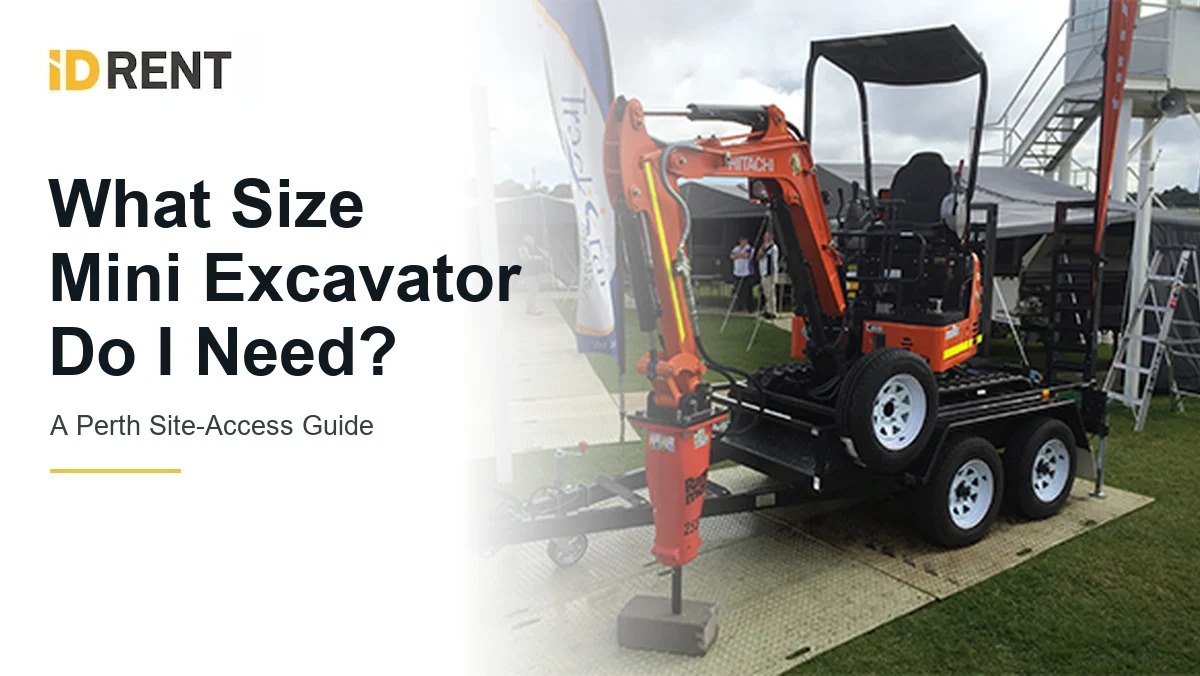
Choosing the right mini excavator for your project involves more than comparing machine sizes. Whether you're planning landscaping, trenching, site preparation or excavation work in Perth, the equipment needs to suit the task, available working space and site conditions.
A mini excavator may appear suitable based on its size, but restricted access, digging requirements, ground conditions and transport arrangements can all affect the final choice.
Before hiring a mini excavator, it helps to understand what the machine needs to do and whether it can safely access the work area.
This guide explains the main factors to consider before making an equipment hire enquiry.
1. Understand Your Excavation Requirements
The first step in choosing a mini excavator is identifying the work you need to complete.
Different projects involve different excavation requirements. For example, landscaping may involve removing soil or preparing garden areas, while trenching work may require particular digging depths and operating space.
Before comparing equipment, consider:
- Type of work: Landscaping, trenching, ground preparation or material handling.
- Digging depth: How deep does the excavation need to be?
- Working area: How much space is available for operating and repositioning the machine?
- Ground material: What soil or other material is likely to be encountered?
- Obstacles: Are there nearby buildings, fences, trees or underground services?
A compact machine may be worth considering for a restricted site, but physical size alone does not establish suitability. Digging reach, operating clearance and the exact machine specifications also matter.
Providing these details to your equipment hire provider can help narrow down the options worth assessing.
2. Check Site Access Before Choosing a Mini Excavator
Site access is one of the most important considerations when planning mini excavator hire in Perth.
A machine may have the required digging capability but still be unsuitable if it cannot reach the work area.
Measure the entire access route
Rather than measuring only the front gate or entrance, check the complete route from the unloading point to the excavation area.
Pay attention to:
- The narrowest gate, doorway or pathway.
- Corners and turning areas.
- Walls, fences and fixed structures.
- Overhead branches, cables or other restrictions.
- Slopes, steps and changes in ground level.
- Space for unloading and safely positioning the equipment.
For example, a backyard excavation project may have adequate space for digging but limited access through a side passage.
In this situation, the access route may influence the type of excavator that can be considered.
Important: Do not select equipment using nominal machine width alone. Attachments, track configurations and operating requirements can affect the clearance needed.
Take accurate measurements and photographs of restricted areas so the exact proposed machine can be assessed before hire.
3. Consider the Ground Conditions
The surface and surrounding environment can also influence equipment selection.
Not every compact excavator is suitable for every type of ground or worksite.
Consider whether your project involves:
Soft or uneven ground
Wet soil, loose material and uneven surfaces can introduce stability and access concerns. These conditions need appropriate site assessment.
Sloping areas
Changes in ground level and sloping surfaces may restrict where equipment can be positioned or operated.
Finished surfaces
Driveways, paved areas, garden paths and landscaped surfaces may require additional planning to avoid unintended damage.
Nearby structures
Fences, retaining walls, trees, drainage and surrounding buildings can affect available operating space.
Understanding these conditions before hiring helps identify potential issues and allows the responsible site professionals to determine suitable equipment and working arrangements.
4. Check Digging Depth, Reach and Operating Space
Mini excavators differ in their working capabilities.
Choosing equipment based only on size or operating weight can overlook important requirements.
The machine must be assessed against the excavation depth, required reach and available working area.
For example, a project may require a particular trench depth while offering limited space to reposition the machine.
You should also consider where excavated soil will be placed and whether other people or equipment need access nearby.
When comparing machines, ask the hire provider to confirm the manufacturer's specifications for the exact model being considered.
Avoid assuming that two excavators with similar dimensions will provide identical digging capabilities.
5. Determine Whether You Need Attachments
Some excavation projects require more than a standard digging bucket.
Depending on the work, your project team may identify a need for specialised attachments or particular bucket configurations.
Before enquiring, describe:
- The material being excavated or handled.
- The type and dimensions of the intended excavation.
- Any specialised tasks involved.
- Attachment requirements already identified by your contractor or project team.
Attachment compatibility should always be checked against the specific excavator model.
An attachment listed within an equipment catalogue is not necessarily compatible with every machine or automatically included in a hire arrangement.
Confirm the exact machine, attachment and availability directly with the hire provider.
6. Plan Mini Excavator Transport and Site Delivery
Transport is another factor that should be considered before arranging mini excavator hire.
Even compact machinery can have substantial transport requirements.
Important considerations include the excavator's actual transport mass, trailer specifications, towing vehicle capacity, applicable regulations and the arrangements for loading and unloading.
The project location also matters.
A site with restricted vehicle access, limited unloading space or difficult ground conditions may require additional planning.
Do not assume that a mini excavator and trailer can be transported by any standard vehicle.
The equipment owner and appropriately competent transport professionals should confirm the specific transport arrangements before equipment is moved.
7. What Information Should You Provide When Hiring a Mini Excavator?
Preparing the right information can make your equipment hire enquiry more efficient.
Before contacting ID Rent, gather the following details:
- Project location: Where will the excavator be used?
- Hire dates: When do you expect to need the equipment?
- Project description: What excavation or ground preparation work is planned?
- Digging requirements: What depth and working area are required?
- Access measurements: What is the narrowest usable point along the route?
- Site conditions: Are there slopes, soft ground, finished surfaces or obstacles?
- Attachments: Have any specific attachments been identified?
- Transport requirements: Are there collection, unloading or access restrictions?
Photos of gates, pathways and the proposed work area can also help explain the site.
You do not need to know the exact machine model before making an enquiry. Clear project information provides a better starting point for discussing suitable equipment.
8. Explore Mini Excavator Hire Options in Perth
If you're planning excavation, landscaping or site preparation work, choosing equipment that matches the actual project requirements is essential.
ID Rent provides an online equipment catalogue where you can explore mini excavators and other machinery available for hire enquiries in Perth.
Visit the Mini Excavators equipment category to review listed equipment and model information.
Before arranging hire, contact the team to confirm the proposed machine's specifications, availability, attachments and relevant hire conditions.
Frequently Asked Questions
What size mini excavator do I need for a backyard?
The appropriate excavator depends on the work required, digging depth, access measurements and ground conditions. Measure the complete access route and discuss the specific task with the hire provider before choosing a machine.
Can a mini excavator fit through a narrow gate?
Some mini excavators have compact dimensions, but access depends on the exact machine configuration and the full route to the working area. Check the manufacturer's specifications and required clearances rather than relying on gate width alone.
Is a smaller mini excavator always better for restricted sites?
Not necessarily. While a compact machine may be easier to consider for limited access, it must also meet the project's digging, reach and operating requirements. The responsible project team should assess both access and capability.
Can I hire a mini excavator with attachments?
Attachment availability and compatibility depend on the particular machine and hire arrangement. Discuss your requirements with ID Rent and confirm what is available for the proposed excavator.
What should I check before hiring a mini excavator in Perth?
Check the excavation requirements, site access, ground conditions, digging depth, operating space, attachments and transport arrangements. Provide this information when making an enquiry so the relevant machine specifications and hire conditions can be reviewed.
Find Mini Excavator Hire Options with ID Rent
Choosing a mini excavator begins with understanding your project, not simply selecting the smallest or largest machine.
By checking your site access, excavation requirements, ground conditions and transport needs beforehand, you can make a more informed equipment hire enquiry.
Planning an excavation project in Perth?
Explore ID Rent's mini excavator listings or contact the team with your project details to discuss relevant equipment options.